
Bulgan, Gökçe
Loading...
Profile URL
Name Variants
Job Title
Email Address
bulgang@mef.edu.tr
Main Affiliation
04.02. Department of Psychology
Status
Former Staff
Website
ORCID ID
Scopus Author ID
Turkish CoHE Profile ID
Google Scholar ID
WoS Researcher ID
Research Topics
Domains
Health SciencesSocial Sciences
Fields
Health ProfessionsSocial SciencesPsychologyArts and Humanities
Subfields
Speech and HearingSociology and Political ScienceSocial PsychologyPhilosophyClinical Psychology
Specific Research Areas
Problem Solving Skills Development
Work-Family Balance Challenges
Attachment and Relationship Dynamics
Education Practices and Challenges
Resilience and Mental Health
Sustainable Development Goals
 1
1NO POVERTY
0
Research Products
 2
2ZERO HUNGER
0
Research Products
 3
3GOOD HEALTH AND WELL-BEING
0
Research Products
 4
4QUALITY EDUCATION
2
Research Products
 5
5GENDER EQUALITY
1
Research Products
 6
6CLEAN WATER AND SANITATION
0
Research Products
 7
7AFFORDABLE AND CLEAN ENERGY
0
Research Products
 8
8DECENT WORK AND ECONOMIC GROWTH
0
Research Products
 9
9INDUSTRY, INNOVATION AND INFRASTRUCTURE
1
Research Products
 10
10REDUCED INEQUALITIES
0
Research Products
 11
11SUSTAINABLE CITIES AND COMMUNITIES
0
Research Products
 12
12RESPONSIBLE CONSUMPTION AND PRODUCTION
0
Research Products
 13
13CLIMATE ACTION
0
Research Products
 14
14LIFE BELOW WATER
0
Research Products
 15
15LIFE ON LAND
0
Research Products
 16
16PEACE, JUSTICE AND STRONG INSTITUTIONS
0
Research Products
 17
17PARTNERSHIPS FOR THE GOALS
5
Research Products

This researcher does not have a Scopus ID.

Documents
0
Citations
0
Publication Collaboration
| Affiliation Name | Count |
|---|---|
| MEF University | 13 |
| Purdue University West Lafayette | 8 |
| Erciyes University | 2 |
| Borsa Istanbul (Turkey) | 1 |
| Türkisch-Deutsche Universität | 1 |
1 / 3
Data obtained from OpenAlex

Scholarly Output
26
Articles
10
Views / Downloads
2304/1799
Supervised MSc Theses
0
Supervised PhD Theses
0
WoS Citation Count
45
Scopus Citation Count
86
Patents
0
Projects
1
WoS Citations per Publication
1.73
Scopus Citations per Publication
3.31
Open Access Source
16
Supervised Theses
0
| Journal | Count |
|---|---|
| International Association for Counselling Conference 2015 | 2 |
| Journal of International Students | 2 |
| Ayazağa İlkokulu velileri için düzenlenen eğitim etkinliği | 1 |
| Boğaziçi Üniversitesi Psikolojik Danışma Sempozyumu'nda düzenlenen çalıştay | 1 |
| Current Psychology | 1 |
Current Page: 1 / 5
Scopus Quartile Distribution
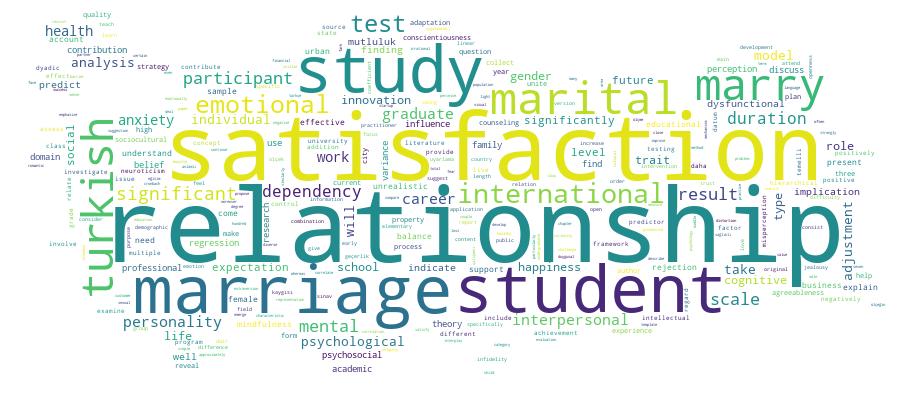
Competency Cloud
26 results
Scholarly Output Search Results
Now showing 1 - 10 of 26
Conference Object Emotional Dependency and Dysfunctional Relationship Beliefs as Predictors of Relationship Satisfaction (conferenceobject)(2015) Çetinkaya Yıldız, Evrim; Bulgan, Gökçe; Bulgan, Gökçe; 04.02. Department of Psychology; 04. Faculty of Economics, Administrative and Social Sciences; 01. MEF University...Article Citation - Scopus: 9Bilinçli-farkındalık Temelli Öz-yeterlik Ölçeği-yenilenmiş (bföö-y): Türkiye Uyarlama Çalışması(Ankara University, 2017) Taylan, Rukiye Didem; Bulgan, Gökçe; Aydın, Utkun; Atalay, Zümra; Özgülük, S. Burcu; Burcu Özgülük, S.; 04.02. Department of Psychology; 06.02. Department of Mathematics and Science Education; 06.01. Department of Guidance and Psychological Counseling; 04. Faculty of Economics, Administrative and Social Sciences; 01. MEF University; 06. Faculty of EducationBu araştırmanın amacı, Cayoun, Francis, Kasselis ve Skilbeck (2012) tarafından geliştirilen "Bilinçli- Farkındalık Temelli Öz-yeterlik Ölçeği-Yenilenmiş"i (Mindfulness-Based Self Efficacy Scale-Revised) Türkçe'ye uyarlayarak geçerlik ve güvenirliğini araştırmaktır. Özgün ölçek İngilizce'dir ve altı boyutta toplam 22 maddeden oluşan beşli likert tipi bir ölçme aracıdır. Uyarlanan Türkçe form iki farklı devlet okulunun 5., 6. ve 7. sınıflarında okuyan 713 öğrenciye uygulanmıştır. Tüm ölçek (?= .72) ve ölçeğin Duygu Düzenleme (?= .73), Duygusal Denge (?= .68), Sosyal Beceriler (?= .65), Sıkıntı Tahammülü (?= .62), Sorumluluk Alma (?= .61) ve Kişilerarası Etkenlik (?= .65) alt boyutları için Cronbach Alfa içtutarlık katsayıları her bir alt boyutta yer alan düşük madde sayısı göz önüne alındığında kabul edilebilir seviyededir. Ayırt edici geçerlik analizleri kız ve erkeklerin bilinçli-farkındalık temelli öz-yeterlik ortalama puanları arasında anlamlı bir fark olmadığını gösterirken sınıf düzeyi açısından anlamlı farklılıklar gözlemlenmiştir. Analiz sonuçları, Türkçe'ye uyarlama çalışması gerçekleştirilen bu ölçeğin öğrencilerin bilinçli-farkındalık temelli öz-yeterlik düzeylerini belirlemede geçerli ve güvenilir bir ölçme aracı olduğunu göstermektedir. Sonuçların kuramsal ve yöntemsel uygulamaları tartışılmıştırArticle Citation - Scopus: 3Children’s Perceptions of Tests: a Content Analysis(Sicklerville: RU Publications, 2018) Bulgan, Gökçe; Bulgan, Gökçe; 04.02. Department of Psychology; 04. Faculty of Economics, Administrative and Social Sciences; 01. MEF UniversityAnxiety that students experience during test taking negatively influences their academic achievement. Understanding how students perceive tests and how they feel during test taking could help in taking effective preventive measures. Hence, the current study focused on assessing children’s perceptions of tests using content analysis. The sample consisted of 1143 participants (566 females and 570 males) attending 3rd (n = 320), 4th (n = 420), 5th (n = 197), and 6th (n = 206) grade classes in three public schools in Istanbul, Turkey. The findings indicated that three main domains emerged from the data. The domains and the categories under each domain were as follows: evaluation (grades, success vs. failure, learning and development, and intelligence), emotions (excitement, fear and anxiety, happiness, curiosity, mixed feelings, and disappointment), and experiential process (answering questions, studying, difficulty, thinking, having fun, cheating vs. honesty, and silence). Understanding students’ experiences with testing early on in their education will give researchers and practitioners the chance to plan effective applications for treatment and prevention, which would influence students’ future achievement and experiences. The study findings could also help teachers and school counselors plan more effective teaching and counseling programs that take into account students’ anxiety levels during tests.Conference Object Ayrımcılık ve Şiddetten İnsanı Anlamaya Giden Yol(2016) Bulgan, Gökçe; Bulgan, Gökçe; 04.02. Department of Psychology; 04. Faculty of Economics, Administrative and Social Sciences; 01. MEF University...Conference Object Mutluluk ve İyi Oluşumuz için Kendimizle Nasıl Daha Sağlıklı Bir İlişki Kurabiliriz?(2016) Bulgan, Gökçe; Bulgan, Gökçe; 04.02. Department of Psychology; 04. Faculty of Economics, Administrative and Social Sciences; 01. MEF University...Article Citation - WoS: 12Citation - Scopus: 21Psychological Adaptation, Marital Satisfaction, and Academic Self-Efficacy of International Students(Univ Louisiana Monroe, 2017) Bulgan, Gökçe; Bulgan, Gökçe; Çiftçi, Ayşe; 04.02. Department of Psychology; 04. Faculty of Economics, Administrative and Social Sciences; 01. MEF UniversityThe authors investigated marital satisfaction and academic self-efficacy in relation to psychological adaptation (i.e., psychological well-being, life satisfaction) in a sample of 198 married international students. Results of multiple regression analyses indicated that marital satisfaction and academic self-efficacy accounted for 45.9% of variance in psychological well-being and 25.8% of variance in life satisfaction scores. Based on the results, the differences between cognitive and emotion oriented processes during psychological adaptation were explained. The authors discuss implications for programs with international students and mental health professionals working in university campuses.Article Citation - WoS: 17Citation - Scopus: 21Gender Differences, Infidelity, Dyadic Trust, and Jealousy Among Married Turkish Individuals(Springer, 2015) Çetinkaya Yıldız, Evrim; Bulgan, Gökçe; Kemer, Gülşah; Bulgan, Gökçe; Yildiz, Evrim Cetinkaya; 04.02. Department of Psychology; 04. Faculty of Economics, Administrative and Social Sciences; 01. MEF UniversityIn the present study, relationships among gender,emotional response to partner’s imagined infidelity (emotionaland sexual infidelity), and dyadic trust (low and high levels oftrust) were investigated as functions of married Turkish individuals’jealousy types (cognitive, emotional, and behavioral).Five hundred thirty seven (276 women and 261 men) marriedindividuals living in urban areas in Turkey participated in thestudy. Results of the Multivariate Analysis of Variance(MANOVA) revealed significant main effects for gender, infidelitytypes, and dyadic trust. Particularly, married Turkish men in this study were found to be more emotionally jealousthan women. Participants who responded to sexual infidelityas more upsetting had higher levels of emotional jealousywhen compared to the participants who found emotional infidelitymore upsetting. Moreover, participants with low dyadictrust for their partners were found to be high in their cognitivejealousy and behavioral jealousy reactions. Results arediscussed in details with implications for future research andsuggestions for mental health practitioners.Conference Object Emotional Dependency and Dysfunctional Relationship Beliefs as Predictors of Relationship Satisfaction(International Association for Counselling, 2015) Çetinkaya Yıldız, Evrim; Bulgan, Gökçe; Bulgan, Gökçe; 04.02. Department of Psychology; 04. Faculty of Economics, Administrative and Social Sciences; 01. MEF UniversityFor many years now social scientist study the factors effecting relationship satisfaction in order to understand how some of the love relationships continue over the years while others cannot. As stated by many philosophers love is, one way or another, very close to mental illness. Undeniably, love theories/typologies accept at least one feature or mechanism that might be described as ‘psychopathological’ and characterized by obsession, irrational idealization, emotional instability or emotional dependency (Tallis, 2005). Remember mania (Lee, 1973), limerence (Tennov, 1979) and infatuation (Sternberg, 1986). Romantic relationships either dating or marriage satisfy our deepest affiliative needs and are also the source of our emotional dependency. Likewise, dysfunctional relationship beliefs (i.e., interpersonal rejection, unrealistic relationship expectation, and interpersonal misperception) are found to be positively correlated to dyadic adjustment and marital satisfaction (i.e., Stackert & Bursik, 2003; Sullivan and Schwebel, 1995) and also negatively correlated to marital distress (i.e., Addis & Bernard, 2002). Cognitive Theory postulates that the endorsement of certain irrational expectations about what makes relationships functional and healthy strongly affects an individual’s ability to adjust within a relationship. In the present study, we aimed at examining the role of emotional dependency and dysfunctional relationship beliefs in predicting married Turkish individuals’ relationship quality. Therefore, our overarching research question was, when gender and marriage duration is controlled, what are the roles of emotional dependency and interpersonal cognitive distortions, namely, interpersonal rejection, unrealistic relationship expectations, and interpersonal misperceptions, in predicting married Turkish individuals’ relationship quality? Participants of the present study were 203 female (%52.9) and 181 male (47.1) married Turkish individuals with an age range of 21 to 73 years (M = 35.98, SD = 8.00). The average length of marriage among the participants was 10.09 years (SD =8.24). Approximately %86 of the participants had college degrees whereas %14 reported graduate degrees. We used convenient sampling method to recruit the participants from urban cities of Turkey. In order to collect data a demographic information form, Relationship Assessment Scale, Emotional Dependency Scale, and Interpersonal Cognitive Distortions Scale were administered. The hierarchical regression analysis results revealed that, after controlling the effects of gender and length of marriage, multiple correlation coefficient between the linear combination of emotional dependency, interpersonal rejection, unrealistic relationship expectation, and interpersonal misperception, and relationship quality elevated to .64. Model 2 was also significant [F(4,373) = 60.79, p<.001, R2 = .407] and four predictors together accounted for 39% of the variance in relationship quality. In this model, emotional dependency uniquely explained a big part of the variance (30%) in relationship quality with a significant positive contribution [t(373) = 13.73, p < .001, ß = .56]. Interpersonal rejection, on the other hand, explained 7.5% of the variance and had a significant negative contribution to the relationship quality [t(373) = -.5.49, p > .001, ß = -.23]. Similarly, unrealistic relationship expectations accounted for 2.8% of the variance and was negatively associated to participants’ relationship quality [t(373) = -3.29, p = .001, ß = -.14]. Nevertheless, the contribution of the interpersonal misperception to the relationship quality was not significant [t(373) = 1.34, p > .05].The results will be discussed in the light of current literature as well as cultural relevance, and implications for future research and practice will be provided.Article Citation - WoS: 2Citation - Scopus: 6Work-Family Balance and Psychosocial Adjustment of Married International Students(Univ Louisiana Monroe, 2018) Bulgan, Gökçe; Bulgan, Gökçe; Çiftçi, Ayşe; 04.02. Department of Psychology; 04. Faculty of Economics, Administrative and Social Sciences; 01. MEF UniversityThe authors investigated how work-family balance mediated therelationship between personality traits, gender roles, social support, andpsychosocial adjustment. Data were collected from 243 marriedinternational graduate students (MIGSs) studying in the United States.Results of structural equation modeling indicated that personality traitsinfluence the psychosocial adjustment process. In addition, beingextraverted, agreeable, and conscientious contributed to balancingacademic and family life, whereas having neurotic tendencies such asexperiencing depression and anxiety diminished work-family balance.Work-family balance did not mediate the relationship between personalitytraits, gender roles, social support, and psychosocial adjustment. Theauthors discussed the findings by considering clinical implications andmaking suggestions for future research.Article Citation - Scopus: 9Çocuklarda Sınav Kaygısı Ölçeği'nin Türkçe Uyarlaması(İlköğretim Online, 2017) Bulgan, Gökçe; Aydın, Utkun; 04.02. Department of Psychology; 06.02. Department of Mathematics and Science Education; 04. Faculty of Economics, Administrative and Social Sciences; 01. MEF University; 06. Faculty of EducationThe purpose of this study was to adapt the “Children’s Test Anxiet Scale (CTAS)” developed by Wren and Benson (2004) into Turkish. The original scale was in English and comprised of three factors including 30 items. Seven experts were involved in the adaptation process to translate the scale into Turkish and then back to English for providing evidence based on the consistency between the two forms. Following the translation process, a pilot study was conducted and the scale was given its final form. The Turkish form was administered to 1100 students who were attending to 3rd, 4th, 5th, and 6th grade classes in 3 public schools. Findings regarding the construct validity of the scale, which were obtained from the confirmatory analysis, supported the three-factor structure of the original scale. Subdimensions of the scale were Thoughts, Off-Task Behaviors, and Autonomic Reactions. Cronbach Alpha coefficients for the overall scale (???= .88) as well as the subdimensions of Thoughts (???= .82), Off-Task Behaviors (???= .72), and Autonomic Reactions (???= .75) were substantial in size. Regarding the discriminant validity analyses, there were no significant gender differences in students’ test anxiety while there were significant grade level differences. These results demonstrated that the Turkish version of the scale is a valid and reliable instrument, which may serve as useful in measuring elementary school students’ test anxiety levels. Directions for future research and practical implications for educational practice are discussed in terms of mathematics education.
- «
- 1 (current)
- 2
- 3
- »