
Altan, Servet
Loading...
Profile URL
Name Variants
Altan, Servet & Servet, Altan & Altan, S.
Job Title
Email Address
altans@mef.edu.tr
Main Affiliation
06.01. Department of Guidance and Psychological Counseling
Status
Current Staff
Website
ORCID ID
Scopus Author ID
Turkish CoHE Profile ID
Google Scholar ID
WoS Researcher ID
Research Topics
Domains
Social Sciences
Fields
PsychologySocial Sciences
Subfields
Social PsychologyEducationExperimental and Cognitive PsychologySafety Research
Specific Research Areas
Motivation and Self-Concept in Sports
Teacher Education and Leadership Studies
Education, Achievement, and Giftedness
Education and Critical Thinking Development
Youth Development and Social Support
Sustainable Development Goals
 1
1NO POVERTY
0
Research Products
 2
2ZERO HUNGER
0
Research Products
 3
3GOOD HEALTH AND WELL-BEING
0
Research Products
 4
4QUALITY EDUCATION
2
Research Products
 5
5GENDER EQUALITY
0
Research Products
 6
6CLEAN WATER AND SANITATION
0
Research Products
 7
7AFFORDABLE AND CLEAN ENERGY
0
Research Products
 8
8DECENT WORK AND ECONOMIC GROWTH
0
Research Products
 9
9INDUSTRY, INNOVATION AND INFRASTRUCTURE
0
Research Products
 10
10REDUCED INEQUALITIES
0
Research Products
 11
11SUSTAINABLE CITIES AND COMMUNITIES
0
Research Products
 12
12RESPONSIBLE CONSUMPTION AND PRODUCTION
1
Research Products
 13
13CLIMATE ACTION
0
Research Products
 14
14LIFE BELOW WATER
0
Research Products
 15
15LIFE ON LAND
0
Research Products
 16
16PEACE, JUSTICE AND STRONG INSTITUTIONS
0
Research Products
 17
17PARTNERSHIPS FOR THE GOALS
1
Research Products

Documents
11
Citations
199
h-index
5

Documents
10
Citations
155
Publication Collaboration
| Affiliation Name | Count |
|---|---|
| MEF University | 6 |
| Bilkent University | 6 |
| University of Crete | 2 |
| University of Thessaly | 2 |
| Crete University Press | 2 |
1 / 3
Data obtained from OpenAlex

Scholarly Output
10
Articles
7
Views / Downloads
637/16
Supervised MSc Theses
1
Supervised PhD Theses
0
WoS Citation Count
32
Scopus Citation Count
39
Patents
0
Projects
0
WoS Citations per Publication
3.20
Scopus Citations per Publication
3.90
Open Access Source
3
Supervised Theses
1
| Journal | Count |
|---|---|
| Environmental Education Research | 1 |
| Healthcare (Switzerland) | 1 |
| Journal of Educational Psychology | 1 |
| Journal of Research in International Education | 1 |
| Social Psychology of Education | 1 |
Current Page: 1 / 2
Scopus Quartile Distribution
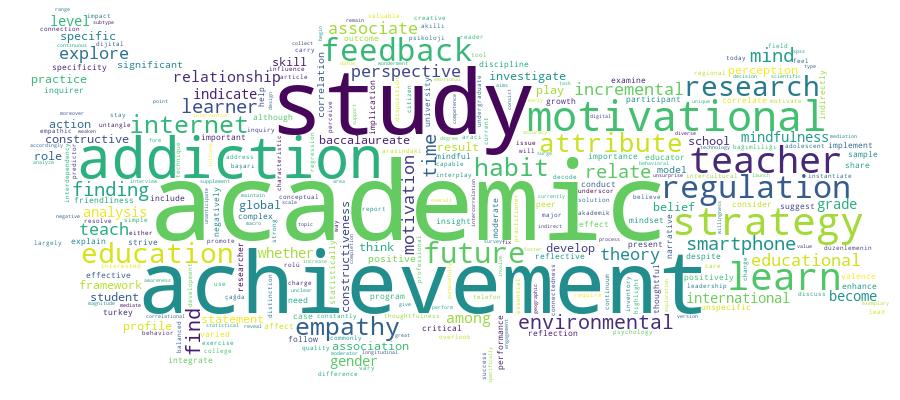
Competency Cloud
10 results
Scholarly Output Search Results
Now showing 1 - 10 of 10
Article Citation - WoS: 3Citation - Scopus: 5How Constructive Is That Feedback? Associations With Undergraduates' Future Time Perspectives Moderated by Student Characteristics'(Elsevier, 2024-06-01) Lin, Shengjie; Schallert, Diane L.; Fong, Carlton J.; Altan, ServetBeliefs about the future, instantiated as a learner's future time perspective, have been largely overlooked in the research on the connection between feedback and motivation. Because feedback statements vary in their level of specificity and friendliness (a commonly reported distinction between peer-provided and instructor-provided feedback), we were interested in the interplay between such feedback characteristics and learners' future time perspective. With 392 U.S. undergraduates, we investigated how future time perspective (specifically, its valence and connectedness) affected whether learners perceived as constructive feedback statements that varied in specificity and friendliness, and whether gender and academic discipline would influence these perceptions. Future time perspective connectedness was positively associated with perceptions of feedback constructiveness for specific statements but was negatively related to constructiveness for unspecific statements. Valence was positively correlated with feedback constructiveness for unspecific statements. Although no differences in academic discipline were found, gender effects emerged. Implications for peer feedback are discussed.Article Citation - WoS: 23Citation - Scopus: 26Stay Motivated and Carry On: a Meta-Analytic Investigation of Motivational Regulation Strategies and Academic Achievement, Motivation, and Self-Regulation Correlates(Amer Psychological Assoc, 2024-08-01) Fong, Carlton J.; Altan, Servet; Gonzales, Cassandra; Kirmizi, Mehmet; Adelugba, Semilore F.; Kim, Yeo-eunMotivational regulation, or the way learners purposefully initiate, maintain, or supplement their willingness for task engagement and completion, has been an important area of research in educational psychology. However, despite the surge of research on this topic, it remains unclear how specific motivational regulation strategies relate to learners' academic performance, motivation, and other forms of self-regulation. Based on findings from 55 studies (67 unique samples), we found a range of positive correlations among 10 types and subtypes of motivational regulation strategies and the following variables: academic achievement (rs = .01-.15), motivation (effort, rs = .11-.52; value perceptions, rs = .21-.35; and competence beliefs, rs = .22-.40), and self-regulation (cognitive, rs = .28-.51; behavioral, rs = .10-.33). Moderator results indicated that the magnitudes of associations among motivational regulation strategies and achievement and self-regulation varied by grade level and geographic region. Intercorrelations among motivational regulation strategies indicated wide-ranging degrees of overlap across strategies. Using meta-analytic structural equation modeling, we explored how motivational regulation strategies indirectly related to achievement through motivational beliefs and how self-regulatory factors were precursors to motivational regulation. Our meta-analytic findings shed light upon which motivational regulation strategies might be most adaptive for academic achievement, motivation, and self-regulation, and identified for whom and under what circumstances specific strategies can be most adaptively used.Article Does Support Meet the Need? A Focus Group Study on Parental Support and Students’ Psychological Need Satisfaction in a Minority School Context(MDPI, 2026-04-18) Vasilaki, Eleni; Vasiou, Aikaterini; Vleioras, Georgios; Anastasakis, Marinos; Mastrothanasis, Konstantinos; Mavrogianni, Aristea; Altan, ServetHighlights What are the main findings? Parental support contributes to minority students' satisfaction of autonomy, competence, and relatedness. Minority educational contexts shape students' psychological well-being through sociocultural and institutional conditions. What are the implications of the main findings? Supportive parenting acts as a protective factor that promotes resilience and psychological well-being among minority students. School and community interventions should address the psychosocial needs of bilingual minority students.Highlights What are the main findings? Parental support contributes to minority students' satisfaction of autonomy, competence, and relatedness. Minority educational contexts shape students' psychological well-being through sociocultural and institutional conditions. What are the implications of the main findings? Supportive parenting acts as a protective factor that promotes resilience and psychological well-being among minority students. School and community interventions should address the psychosocial needs of bilingual minority students.Abstract Background: Parental practices that support autonomy, provide structure, and foster warm relationships are associated with greater satisfaction of students' basic psychological needs for autonomy, competence, and relatedness. In minority educational contexts, however, students' psychological need satisfaction is also shaped by broader sociocultural conditions that may create additional pressures and sources of chronic stress. Within such environments, parental support may function as a protective factor that helps students cope with educational and cultural demands. Objective: The aim of this study was to explore how parental support contributes to the satisfaction of students' basic psychological needs within a minority educational context where students from the Greek minority attend a bilingual school operating within a Turkish educational framework. Methods: A qualitative design was employed using three focus groups conducted in a minority school located in Gökçeada, Türkiye: one with parents (N = 5), one with lower secondary school students (N = 6), and one with upper secondary school students (N = 6). Interview questions were developed on the basis of Basic Psychological Needs Theory. Data were analyzed thematically by five members of the research team. Results: Findings indicated that parental support influenced students' need satisfaction through practices related to autonomy (e.g., trust, space for mistakes), competence (e.g., encouragement, comparison), and relatedness (e.g., emotional presence, empathy). However, these practices were not experienced in a uniform way. Rather, their meaning and impact were shaped by contextual conditions associated with minority status, including bilingual educational demands, limited resources, and close-knit community dynamics. Conclusions: The study suggests that in minority school settings, parental support operates not simply as a general interpersonal resource but as a contextually mediated protective process. By showing how sociocultural and institutional conditions shape the enactment and experience of autonomy, competence, and relatedness, the findings extend existing BPNT research beyond majority settings and offer a more context-sensitive understanding of students' psychological need satisfaction.Book Mindfulness and Thoughtfulness(Rowman & Littlefield, 2023) Altan, Servet; Lane, Jennie FarberTeachers and researchers in education today are charged with helping learners resolve constantly changing global and regional issues. These issues do not have simple solutions and addressing them requires critical and creative ways of thinking. Essential to developing these thinking skills is to examine current dispositions and behaviors; to become more mindful of why we think the way we do and to become more thoughtful about actions we take. In Mindfulness and Thoughtfulness: Leading and Teaching with Habits of Mind in Research and Practice, practitioners and researchers in the field of education present learning theories, case studies, teaching techniques, and professional development strategies associated with these Habits of Mind. Readers will find teaching inventories, self-assessment tools, and reflection exercises to become mindful and thoughtful teachers and educational researchers.Article Ecologically Negotiated Student Motivation: A Multi-Perspective Qualitative Study through Self-Determination Theory and Ecological Systems Theory(Springer, 2026-04-22) Gkontelos, Angelos; Vasilaki, Eleni; Mavrogianni, Aristea; Vasiou, Aikaterini; Vleioras, Georgios; Altan, ServetThis qualitative study examined how student motivation is described, supported, and understood by students, teachers, and parents in the Greek school located in Gökçeada (Imvros), Turkey. Drawing on Self-Determination Theory (SDT) and Bronfenbrenner's Ecological Systems Theory (EST), the study addressed three questions: (a) how students interpret their motivation in daily school life, (b) how teachers and parents observe and foster motivation, and (c) how relational, institutional, and cultural factors shape motivational experiences across ecological levels. Data were collected through four focus group interviews with lower secondary school students (N = 6), upper secondary school students (N = 6), teachers (N = 4), and parents (N = 5), and analyzed thematically using a combined inductive-deductive approach. Participants described motivational experiences that could be situated along the SDT continuum (from disengagement to interest/enjoyment), while inductive themes across stakeholder accounts also highlighted teacher influence, perceived competence, and parental scaffolding. Teachers tended to emphasize structure, discipline, and observable engagement, whereas parents highlighted cultural identity, routines, and long-term aspirations. Viewed through an ecological lens, motivation was described as co-constructed across systems: microsystem relationships, mesosystem home-school alignment, exosystem institutional constraints, macrosystem cultural hybridity, and chronosystem disruptions such as the COVID-19 pandemic. By integrating SDT with EST analytically, the study demonstrates how the quality of motivational regulation is co-constructed across systems rather than residing solely within individual students. The findings offer context-sensitive insights into motivational processes in minority and bilingual school environments and highlight the importance of examining stakeholder perspectives comparatively to understand convergences and misalignments in motivational support.Article Citation - WoS: 3Citation - Scopus: 4Exploring Habits of Mind Associated With Incremental Learning Theory To Explain Actions of Teachers Integrating Environmental Education(Routledge Journals, Taylor & Francis Ltd, 2024-03-11) Lane, Jennie F.; Franzen, Rebecca L.; Altan, ServetThis study was launched after re-analyzing teacher narratives from an earlier study; the narratives were reflections on environmental education practices. The analysis involved using a framework that relates Habits of Mind to educational theories. An unsurprising outcome was finding Habits of Mind associated with mindfulness and constructivism. An unanticipated finding was to learn how incremental learning theory explains why teachers strive to include environmental education in their lessons. Although there has been environmental research related to growth and fixed mindsets, more studies in environmental education are needed to explore how incremental learning theory plays a role in the decisions and actions of exemplary environmental educators. Therefore, to begin this exploration, a new study was conducted using the framework to analyze interviews with ten currently practicing teachers. The findings give insights into the following Habits of Mind associated with incremental beliefs: wonderment and awe, continuous learning, striving for accuracy, risk-taking, and persistence.Book Part Citation - Scopus: 1Decoding Adolescents Internet Addiction, Academic Achievement, and Empathy Levels: Untangling Complex Associations(IGI Global, 2024-12-27) Meral, S.; Altan, ServetThis study explores the relationships between internet addiction, academic achievement, and empathy levels among 179 eighth- grade students. Using regression analyses, the research investigates how internet addiction impacts academic performance and empathy, and whether gender plays a role in internet addiction. Results indicate no statistically significant correlation between internet addiction and either academic achievement or empathy levels. However, a moderate positive correlation is found between empathy and academic performance. These findings suggest that internet addiction may not be a strong predictor of academic or empathic outcomes in adolescents. The study underscores the importance of promoting empathy to enhance academic success and highlights the need for balanced internet use. Future research should consider longitudinal designs and diverse samples to further explore these complex relationships. Implications for educational practices include integrating social- emotional learning programs to foster empathy and support students’ overall well- being. © 2025 by IGI Global Scientific Publishing.Article Citation - WoS: 3Citation - Scopus: 3Learner Profile Attributes in Ib Teaching: Insights From a Continuum School in Turkey(Sage, 2022-11-18) Lane, Jennie F; Altan, Servet; Keser, ÖzlemThis article presents findings from a case study of a K-12 school in Turkey where teachers shared perceptions of how the International Baccalaureate Learner Profile attributes related to their own practice. While discussing the interdependency of the attributes, teachers considered that being an inquirer is the most valuable attribute for effective International Baccalaureate teachers. Participants at all grade levels believed that being open-minded and reflective were important attributes. Despite the importance of inquiry, participants shared that they feel most capable of implementing the attribute of being knowledgeable. The conceptual framework developed for this study may be used by schools and teacher educators to develop attributes of teachers who can help students become global citizens with intercultural understandings.Master Thesis Dijital Çağda Akıllı Telefon Bağımlılığı ve Akademik Başarı Arasındaki İlişki: Öz Düzenlemenin Aracı Rolü(2025) Işık, Şeyma Nur; Altan, ServetBu araştırma, üniversite öğrencilerinde akıllı telefon bağımlılığı, öz düzenleme becerileri ve akademik başarı arasındaki ilişkileri incelemeyi amaçlamaktadır. Araştırmada, öz düzenleme becerisinin, akıllı telefon bağımlılığı ile akademik başarı arasındaki ilişkide aracılık rolü değerlendirilmiştir. Çalışma ilişkisel tarama modeline dayalı olarak gerçekleştirilmiş ve örneklem, Türkiye'de öğrenim görmekte olan 340 üniversite öğrencisinden oluşmuştur. Veriler, Akıllı Telefon Bağımlılığı Ölçeği (Kısa Form), Öz Düzenleme Ölçeği ve öğrencilerin beyan ettikleri akademik not ortalamaları aracılığıyla toplanmıştır. İstatistiksel analizler, SPSS 30.0 programı ve Hayes'in PROCESS Makro Model 4 yapısı kullanılarak gerçekleştirilmiştir. Bulgular, akıllı telefon bağımlılığı ile öz düzenleme arasında negatif yönde anlamlı bir ilişki olduğunu göstermiştir. Ayrıca, öz düzenleme ile akademik başarı arasında pozitif ve anlamlı bir ilişki saptanmıştır. Aracılık analizine göre, akıllı telefon bağımlılığının akademik başarı üzerindeki dolaylı etkisi öz düzenleme aracılığıyla istatistiksel olarak anlamlı bulunmuştur. Sonuçlar, akıllı telefon bağımlılığının öğrencilerin öz düzenleme becerilerini zayıflatarak dolaylı olarak akademik başarılarını olumsuz etkilediğini ortaya koymaktadır. Bu bağlamda, öğrencilerin dijital teknoloji kullanımına yönelik farkındalıklarının artırılması ve öz düzenleme becerilerinin geliştirilmesine yönelik müdahale programlarının önem taşıdığı söylenebilir.Article Does Support Meet the Need? A Focus Group Study on Parental Support and Students’ Psychological Need Satisfaction in a Minority School Context(Healthcare, 2026-04-18) Vasiou, Aikaterini; Altan, Servet; Vasilaki, Eleni; Mavrogianni, Aristea; Vleioras, Georgios; Anastasakis, Marinos; Mastrothanasis, KonstantinosBackground: Parental practices that support autonomy, provide structure, and foster warm relationships are associated with greater satisfaction of students’ basic psychological needs for autonomy, competence, and relatedness. In minority educational contexts, however, students’ psychological need satisfaction is also shaped by broader sociocultural conditions that may create additional pressures and sources of chronic stress. Within such environments, parental support may function as a protective factor that helps students cope with educational and cultural demands. Objective: The aim of this study was to explore how parental support contributes to the satisfaction of students’ basic psychological needs within a minority educational context where students from the Greek minority attend a bilingual school operating within a Turkish educational framework. Methods: A qualitative design was employed using three focus groups conducted in a minority school located in Gökçeada, Türkiye: one with parents (N = 5), one with lower secondary school students (N = 6), and one with upper secondary school students (N = 6). Interview questions were developed on the basis of Basic Psychological Needs Theory. Data were analyzed thematically by five members of the research team. Results: Findings indicated that parental support influenced students’ need satisfaction through practices related to autonomy (e.g., trust, space for mistakes), competence (e.g., encouragement, comparison), and relatedness (e.g., emotional presence, empathy). However, these practices were not experienced in a uniform way. Rather, their meaning and impact were shaped by contextual conditions associated with minority status, including bilingual educational demands, limited resources, and close-knit community dynamics. Conclusions: The study suggests that in minority school settings, parental support operates not simply as a general interpersonal resource but as a contextually mediated protective process. By showing how sociocultural and institutional conditions shape the enactment and experience of autonomy, competence, and relatedness, the findings extend existing BPNT research beyond majority settings and offer a more context-sensitive understanding of students’ psychological need satisfaction.